


All Products
-
Injection Molding Services
-
Plastic Injection Molding Service
-
Dual Shot Injection Molding
-
Precision Injection Molding
-
Single Shot Injection Molding
-
Overmolding Injection Molding
-
OEM Injection Molding
-
Insert Injection Molding
-
Electronics Injection Molding
-
Silicone Injection Molding
-
Die Casting Service
-
 RecebThe Client wants you to produce their product because they were glad with the results with your former productions.
 -
SeanGood teamwork – good suppliers, fast actions and good people on both sides working together …. Thankyou.
-
ChrisThanks for caring enough to react, think differently and innovate with us – here again on this occasion to find this alternative – much appreciated from us in RnD,
-
RaffyYes, you are doing excellent job, thank you Welson, I undesratnd it is so difficult
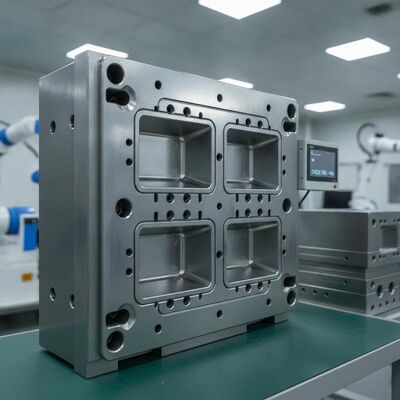
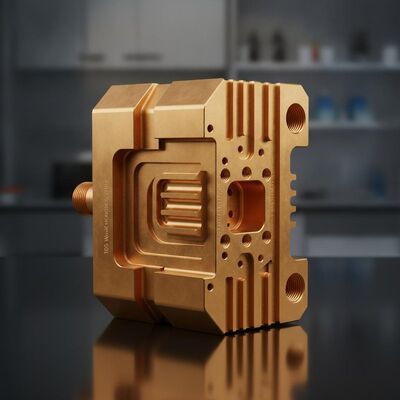
ISO 9001 Certified Rapid Prototyping Mold Injection Molding Service with Aluminum 7075-T6 for Bridge Tooling



| Place of Origin | Xiamen, China |
|---|---|
| Brand Name | KDET |
| Certification | ISO 9001:2015, IATF 16949 |
| Model Number | KD-RP-PT009 |
| Minimum Order Quantity | 500 pieces |
| Price | Based on part complexity and volume |
| Packaging Details | Custom PE bags + export cartons + pallets |
| Delivery Time | 15-30 working days mold; 7-15 days production |
| Payment Terms | T/T, L/C at sight, PayPal |
| Supply Ability | 5,000,000 pieces per year |
Product Details
| Prototype Mold Type | Aluminum 7075-T6, 3D-Printed Inserts, Hybrid | Lead Time | 7-15 Days Aluminum; 3-5 Days 3D-printed Inserts |
|---|---|---|---|
| Mold Life | 5,000 - 50,000 Shots | Materials | ABS, PP, PC, PA66, POM, PMMA, TPE (production Grade) |
| Part Size | 10mm-400mm | Surface Finish | SPI B-2 To A-2 |
| Bridge Tooling | Up To 50,000 Parts | Certification | ISO 9001:2015 |
| Highlight | ISO 9001 Certified Injection Molding Service,Aluminum 7075-T6 Rapid Prototyping Mold,Bridge Tooling Quick-Turn Mold Trial |
||
Product Description
KDET offers rapid prototyping and quick-turn mold trial services that accelerate product development by delivering functional injection-molded prototypes in days instead of weeks. Our aluminum prototype molds, combined with 3D-printed mold inserts and rapid CNC machining, enable design validation, functional testing, and market testing with production-equivalent material and surface quality. Since 2007, we have supported hundreds of product development programs from initial concept through production ramp-up.
Company Strength: 18 years of injection molding excellence since 2007 | ISO 9001:2015 & IATF 16949 certified | 40-50 skilled professionals | 80%-90% export to 30+ countries | 5,000,000+ pieces annual capacity | Full in-house tooling, molding, QC, and logistics.
Product Solutions
KDET provides world-class rapid prototyping mold solutions engineered for the demanding requirements of global OEM manufacturers. With 18 years of industry experience and a fully integrated manufacturing facility in Xiamen, China, we deliver end-to-end solutions from engineering consultation and DFM analysis through mold manufacturing, production, quality assurance, and global logistics. Our structured project management approach ensures clear milestones, transparent communication, and documented quality at every stage.
Key Features- Aluminum Prototype Molds: Manufactured from 7075-T6 aircraft-grade aluminum, our prototype molds are machined at 3-5x the speed of steel tooling, achieving delivery in 7-15 working days for single-cavity configurations. Mold life typically ranges from 5,000 to 50,000 shots — ideal for bridge tooling and pilot production.
- 3D-Printed Mold Inserts: For ultra-rapid validation, we use SLA or DLP 3D-printed mold inserts capable of producing 50-500 parts with production-grade thermoplastics. Lead times as short as 3-5 working days for simple geometries.
- Production-Equivalent Quality: Our rapid tooling uses the same steel mold bases, ejector systems, and cooling circuits as production tooling, ensuring prototype parts accurately represent production part quality, shrinkage, and mechanical properties.
- Bridge Tooling Capability: Aluminum prototype molds with enhanced cooling and premium surface finishes can serve as bridge tooling, supporting production volumes of 10,000-50,000 parts while steel production tooling is being manufactured.
- Design Iteration Support: Low-cost aluminum tooling enables rapid mold modifications between design iterations. Cavity and core changes can typically be completed in 1-3 working days, supporting agile product development cycles.
- Full Reporting: Every prototype run includes a detailed dimensional inspection report, process parameter documentation, and material certification, providing the engineering data needed for design validation and production tooling optimization.
| Parameter | Specification |
|---|---|
| Prototype Mold Type | Aluminum (7075-T6), 3D-Printed Inserts, Hybrid (Al body + Steel inserts) |
| Aluminum Mold Lead Time | 7-15 working days for single-cavity |
| 3D-Printed Insert Lead Time | 3-5 working days |
| Aluminum Mold Life | 5,000 – 50,000 shots |
| Available Materials | ABS, PP, PC, PA66, POM, PMMA, TPE — same as production grades |
| Part Size Range | 10mm * 10mm to 400mm * 400mm |
| Mold Base | Standard MUD (Master Unit Die) frame or custom aluminum base |
| Surface Finish | SPI B-2 to A-2; bead blast, polished, or textured |
| Bridge Tooling Output | Up to 50,000 parts (reinforced aluminum with steel wear inserts) |
- Product Design Validation: Test form, fit, and function with production-grade materials before committing to expensive steel production tooling. Identify and resolve design issues early when changes are fast and low-cost.
- Regulatory Testing: Produce functional prototypes for UL, FDA, CE, and other regulatory compliance testing using the exact material grade that will be used in production, ensuring valid test results.
- Market Testing & Trade Shows: Generate small production runs of 500-5,000 units for market testing, customer sampling, trade show displays, and crowdfunding campaign fulfillment.
- Assembly & Process Validation: Validate assembly procedures, fixturing, and manufacturing processes using production-equivalent components before production tooling is complete.
- Bridge to Production: Maintain supply continuity during production tooling manufacture by using aluminum bridge tooling for initial production volumes, avoiding costly line-down situations.
Industry Success Case: A Silicon Valley medical device startup needed 2,000 functional prototypes of a handheld diagnostic device for clinical trials within 6 weeks. We manufactured 3 aluminum prototype molds (housing, button, and lens) in 12 working days, produced 2,500 parts from medical-grade PC/ABS, and delivered the complete order with full dimensional reports 5 weeks from PO. The prototypes passed all clinical trial requirements, and the data gathered from the aluminum molds informed the design of 4-cavity steel production tooling. The client received FDA clearance 3 months ahead of their original schedule.
Production Cycle
- Engineering Review & DFM: 2-5 working days — Design analysis, simulation, and feasibility report
- Mold Design & Approval: 3-7 working days — Full 3D mold design for client sign-off
- Mold Manufacturing: 15-30 working days — Precision machining, EDM, assembly
- Mold Trial & Samples: 2-3 working days — T0 samples with dimensional inspection report
- Production & QC: 7-15 working days — Full production with SPC and in-line inspection
- Packaging & Shipment: 2-5 working days — Professional export packaging with full documentation
| Parameter | Details |
|---|---|
| Minimum Order Quantity | 500-5,000 pieces depending on part size and complexity |
| Mold Lead Time | 15-30 working days |
| Sample Lead Time | 3-5 days with existing molds; 5-15 days with new tooling |
| Production Lead Time | 7-15 working days after sample approval |
| Payment Terms | T/T 30% deposit, 70% before shipment; L/C at sight available |
| Shipping Methods | Sea freight (15-40 days), Air freight (3-7 days), Express (3-5 days) |
| Packaging | Custom PE bags + export cartons + fumigated pallets |
Q: How quickly can I get prototype injection molded parts?
A: For aluminum prototype molds, typical delivery is 7-15 working days from approved 3D CAD. For ultra-rapid needs, 3D-printed mold inserts can deliver small quantities (50-200 parts) in 3-5 working days. Express service with overtime reduces standard lead times by 30-40% for an additional charge.
Q: Are prototype molded parts representative of production parts?
A: Yes. Our prototype molds use the same mold base system, ejection layout, and gate design principles as production tooling. Parts are molded from the same commercial-grade resin you will use in production, so mechanical properties, shrinkage, and surface finish are representative. The primary difference is mold longevity — aluminum molds wear faster than hardened steel.
Q: Can I use the aluminum prototype mold for bridge production?
A: Yes, our enhanced aluminum prototype molds with steel wear inserts, hard anodized surfaces, and optimized cooling can serve as bridge tooling producing 10,000-50,000 parts. This is a popular strategy for clients who need to start production immediately while steel production tooling is being manufactured.
Q: What CAD formats do you accept for prototype mold design?
A: We accept STP (STEP), IGS (IGES), X_T (Parasolid), and native SolidWorks, UG/NX, CATIA, and Creo files. Please provide 3D solid models with drafted surfaces and nominal wall thickness. Our DFM review will identify any geometry issues that could affect moldability before we begin manufacturing.
Recommended Products
